Nikon FM3A
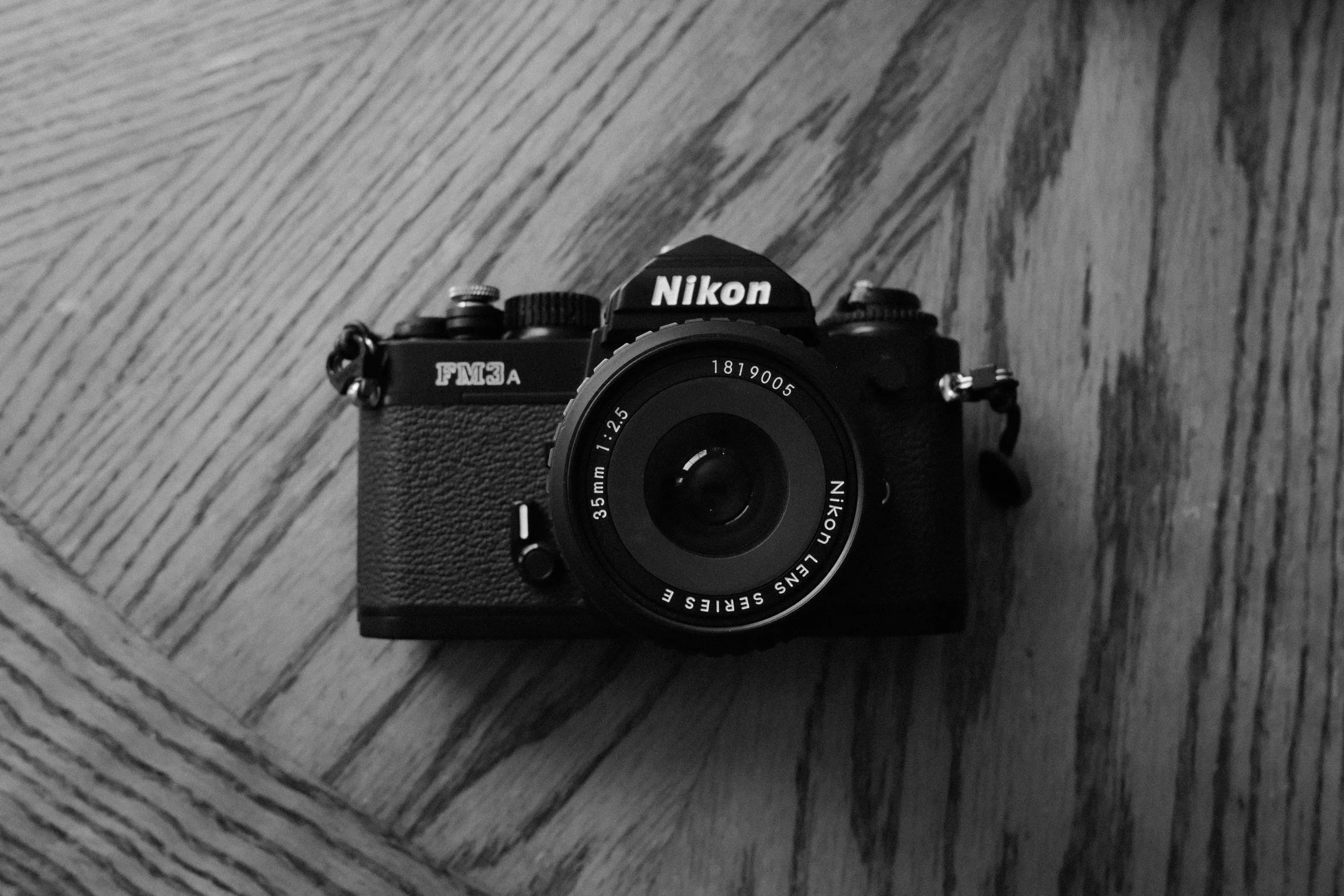
I got ahold of a Nikon FM3A on the way back from a family vacation. My wife and I love to stop at local antique shops and camera stores. We decided to stop at a camera shop in a college town. There they had very prominent Nikon FM3A on display still in the box and covered in its original packaging. It was in beautiful mint condition, they wouldn’t even let you dry fire it. It was told to us that the original owner only put one roll of film in it, and given the condition I was inclined to believe it. Supposably, the owner had passed away, and the daughter brought it in after collecting his belongings to get rid of.
Now the store originally had it at a pretty hefty price, but after some bargaining (skills I had picked up from my wife) we managed to come to a reasonable offer. I was even able to talk them into throwing my first roll of film to use with it.
The Nikon FM3a is a mechanical marvel
The Nikon FM3A is highly sought after for its hybrid mechanical electronic engineering, electronic in aperture priority it can shoot shoot up to 1/4000 of a second. Even more amazing the same 1/4000 of a second shooting speed can be obtained without a battery in full manual. prior to this the fastest shutter speeds were only able to reach 1/2000 of a second, and most commercially available film cameras would max out at 1/1000 of a second. This also boast an auto DX coding ranging from iso 25-5000, and manual iso input up to 6400. I personally never used the auto DX coding , but between the manual 6400 ISO input and the 1/4000 max shutter speeds it makes for pushing and pulling film so easy. Which I have loved doing with black and white film.
I have thoroughly enjoyed the aperture priority mode where I can simply set my aperture and pick out my depth of field. From there I can simply stay focused on the focus and composition and fire away. Makes for capturing family moments fun and easy without going to full auto.
Not perfect but close to heavenly
One small quirk that takes some getting used to is the on off switch, to turn it on you have to extend the film wind lever into its ready position. If you make the film winder lever flush with the camera, it will effectively turn the camera off and make the camera inoperable. Its very tempting to make it flush because while protruding the film wind lever can rest just over your eyebrow. Like I said it will take some getting used to, but when you do get used to it you can find yourself in a pretty good rhythm and the camera will feel like an extension of yourself.
I took the Nikon FM3A as my main camera at a local cruise show in downriver Michigan. I paired it with the 70-150mm 3.5 E series lens. I have acquired a small collection of lens for this camera. Mostly ranging from D and E series lenses that not only keep the weight of the camera down, but produce fantastic images. The lenses I have for the Nikon FM3A are a 24 mm f2.8 D series, 35mm 1.8 E series, 50mm 1.8 e series, the 60mm 2.8 micro lens, and the aforementioned 70-150 f3.5 e series lens.
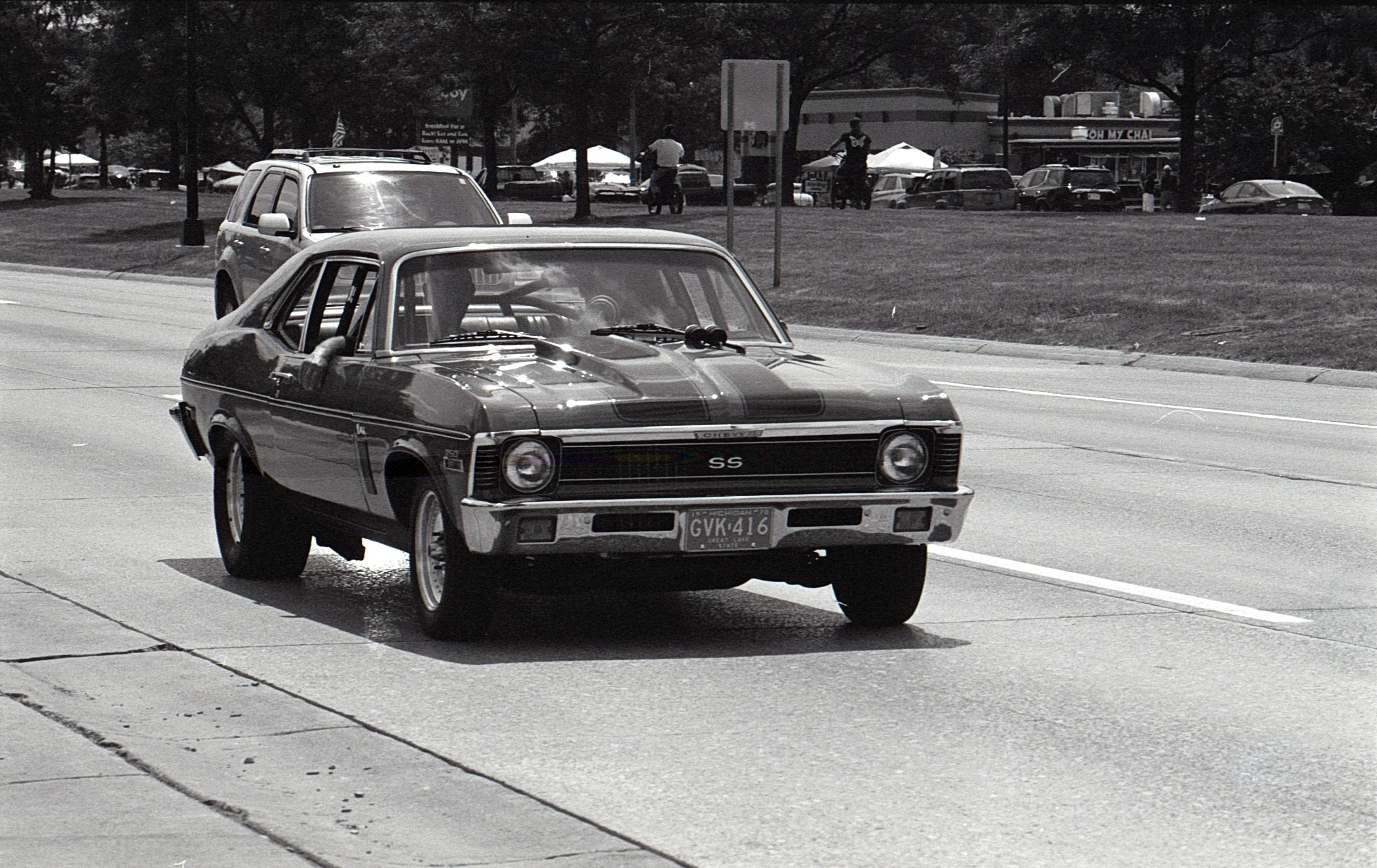
Nikon FM3A 70-150 | Ilford HP5 plus
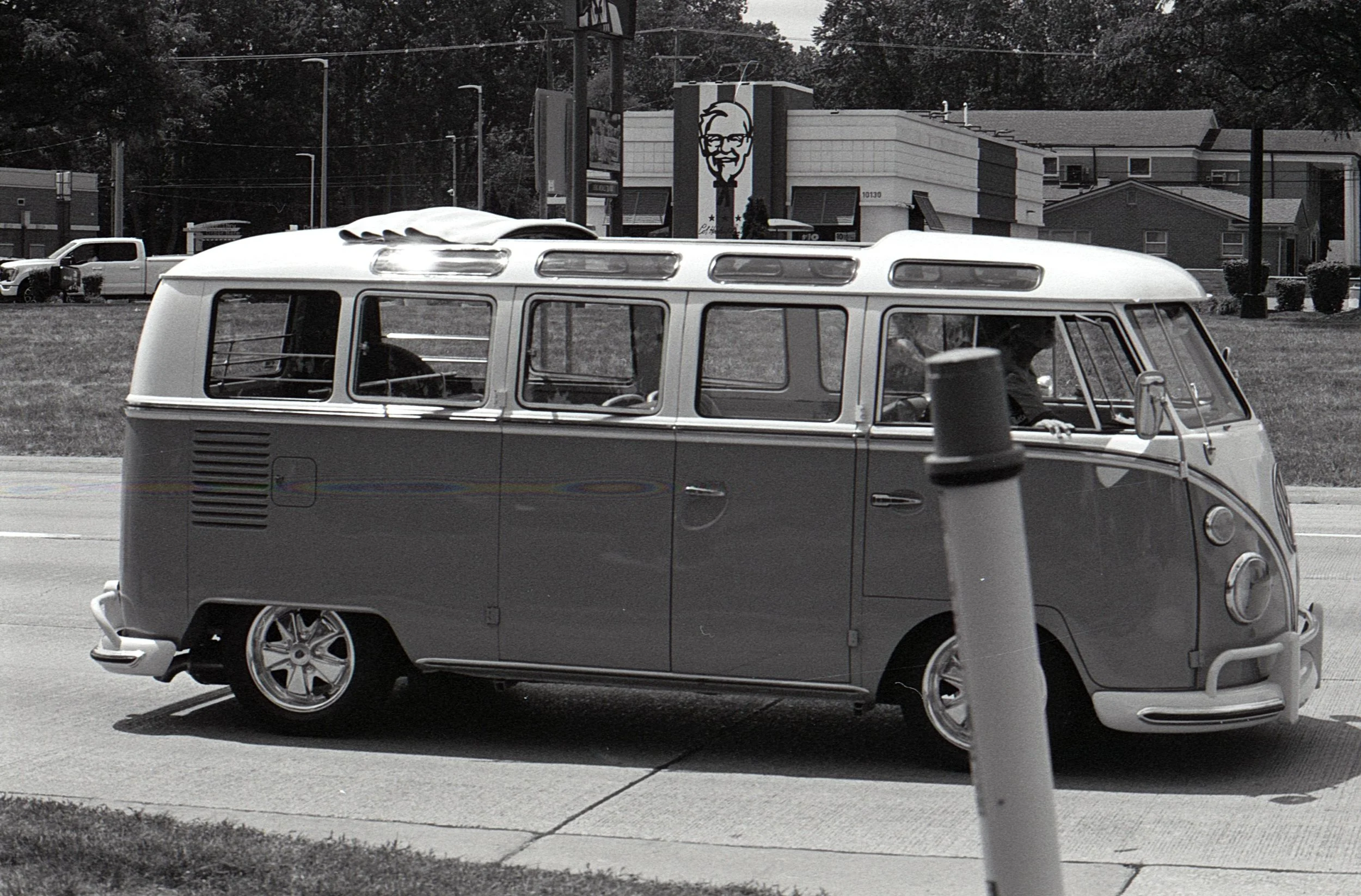
Nikon FM3A 70-150 | Ilford HP5 plus
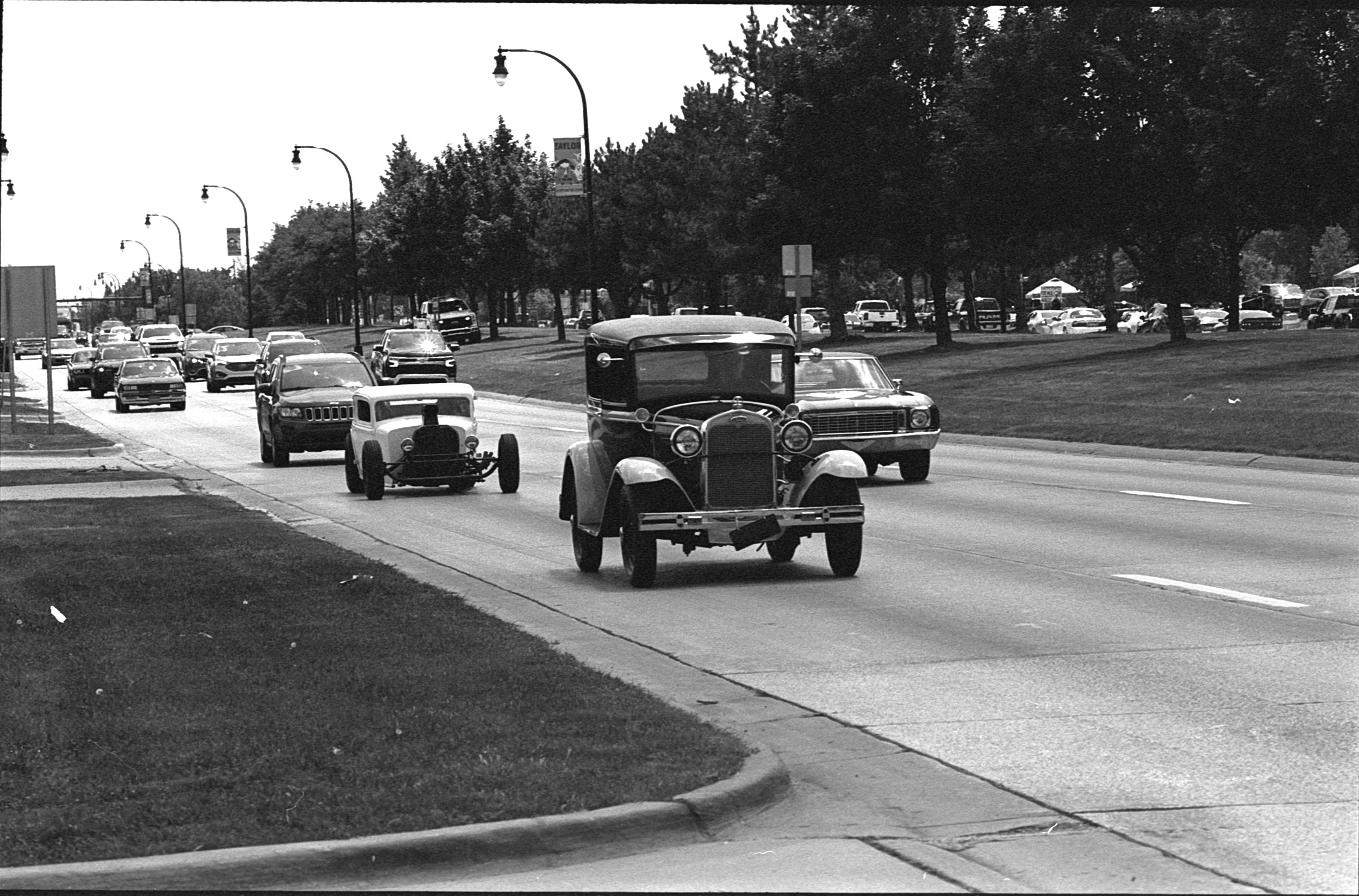
Nikon FM3A 70-150 | Kodak tri x 400
Conclusion
This is the film camera I have been searching for! The beauty in the design, the light weight, and the high shutter speed capabilities make this camera in my opinion the perfect manual focus camera that I plan to keep in my arsenal for a very long time.